







Vietnam’s coastline stretches over 3,000 kilometers, and packed into that length is a genuinely wide range of beach experiences — resort-lined stretches with full amenities, half-moon coves accessible only by boat, and quiet islands where a single beach can feel entirely yours. Whether you’re after powdery white sand, snorkeling, or a place to simply do nothing for a few days, here are 10 beaches worth building a trip around, running roughly north to south.
1. Cat Ba Island (Lan Ha Bay)
Sitting just south of Ha Long Bay, Cat Ba Island offers the same dramatic limestone karst scenery with noticeably fewer crowds. Lan Ha Bay’s beaches are smaller and more secluded than the mainland’s, often reachable only by boat, which makes them a favorite for a quieter alternative to Ha Long Bay’s more heavily trafficked routes.
Best for: Combining a beach stop with kayaking and karst scenery Best time to visit: April to October, avoiding the region’s typhoon season in late summer
2. My Khe Beach, Da Nang
My Khe stretches for kilometers of golden sand just a short ride from downtown Da Nang, backed by rows of coconut trees and a genuinely lively stretch of resorts, restaurants, and water sports operators. It’s consistently ranked among Vietnam’s most picturesque beaches, and its convenience — close to the airport, the city, and Da Nang’s other attractions — makes it an easy, high-value stop on almost any central Vietnam itinerary.
Best for: Surfing, jet-skiing, and a beach day that doesn’t require leaving the city Best time to visit: February to August, during central Vietnam’s dry season
3. An Bang Beach, Hoi An
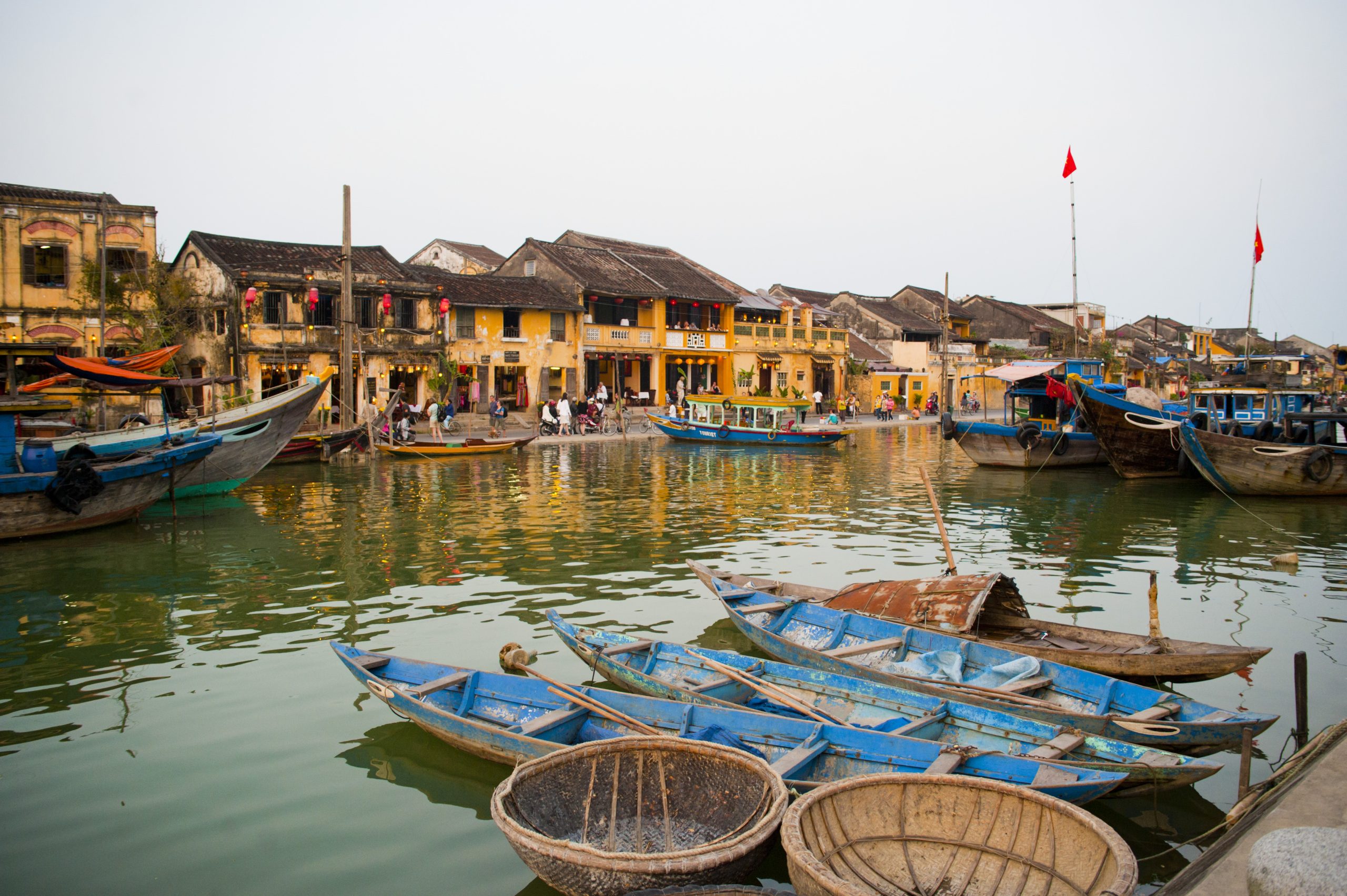
A short bike ride from Hoi An’s Ancient Town, An Bang trades big resort energy for a more relaxed, beach-bar atmosphere. White sand, casual seafood shacks, and a noticeably younger, more backpacker-friendly crowd make it a nice contrast to the lantern-lit streets just inland.
Best for: Pairing a beach afternoon with Hoi An’s Old Quarter Best time to visit: February to August
4. Ky Co Beach, Quy Nhon
Often nicknamed the “Maldives of Vietnam,” Ky Co is a half-moon cove of golden sand and strikingly clear turquoise water, reachable only by a short boat ride from Quy Nhon. Infrastructure here is deliberately minimal — a couple of cafés, basic facilities — which is exactly the appeal for travelers looking to escape more developed beach towns. Shallow water near the shore makes it good for families, and the rocks at either end offer decent snorkeling.
Best for: A quieter, less-commercialized beach experience with genuinely striking water color Best time to visit: March to August
5. Nha Trang
Nha Trang remains one of Vietnam’s most established beach destinations, offering a full resort experience alongside genuinely good diving and snorkeling in the surrounding bay’s islands. The city beach itself is long, clean, and well set up for swimming, sunbathing, and water sports, with a lively boardwalk and nightlife scene just steps away.
Best for: Travelers who want beach time alongside city amenities, nightlife, and diving trips Best time to visit: February to March for the calmest seas, though the dry season runs roughly through August
6. Doc Let Beach
About 45 kilometers north of Nha Trang, Doc Let offers a quieter, more low-key alternative with fine white sand and shallow, calm water that stays clear for a good distance from shore. Palm trees line much of the beach, and infrastructure remains minimal, which keeps both the crowds and the prices down.
Best for: Families and travelers wanting a peaceful escape from Nha Trang’s busier stretch Best time to visit: February to August
7. Mui Ne
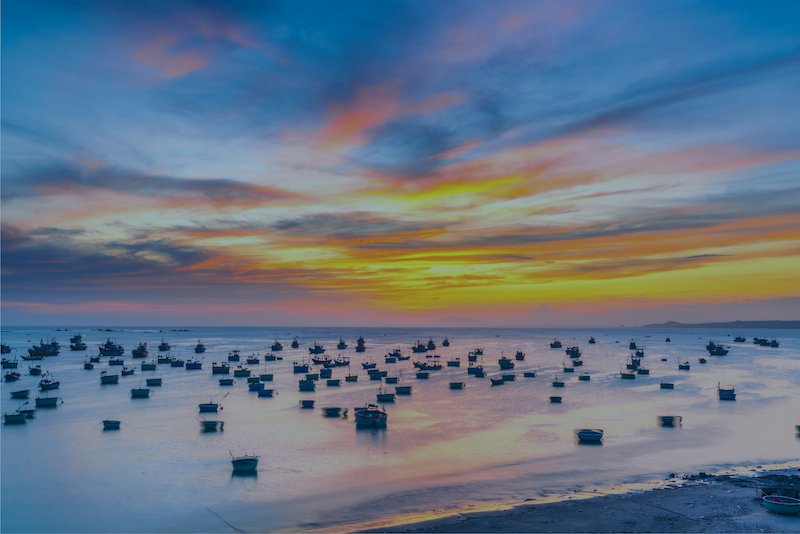
Mui Ne carries a different character from Vietnam’s other beach towns, best known for its red and white sand dunes and consistently strong coastal winds that make it one of Southeast Asia’s top kitesurfing and windsurfing destinations. Beyond the water sports scene, the beach itself is scenic and considerably less developed than Nha Trang or Da Nang.
Best for: Kitesurfing, windsurfing, and sand dune excursions Best time to visit: November to April for the strongest, most reliable winds
8. Dam Trau Beach, Con Dao
Con Dao remains one of Vietnam’s most unspoiled island destinations, and Dam Trau is its standout beach — a crescent of white sand backed by forest, with clear water and a genuinely remote feel that’s increasingly hard to find elsewhere in the country. The island’s history as a former prison colony also adds a layer of depth beyond the beach itself, for travelers interested in Vietnam’s more complex modern history.
Best for: Solitude, snorkeling, and a genuinely off-the-beaten-path island experience Best time to visit: March to September, avoiding the rougher seas of the winter monsoon
9. Bai Sao (Sao Beach), Phu Quoc
Consistently ranked among Vietnam’s best beaches, Bai Sao delivers exactly what a tropical island beach should: powder-fine white sand, calm turquoise water, and a scenic curve that photographs beautifully at any time of day. It’s more developed than Con Dao’s beaches, with beach clubs and restaurants along the shore, but still manages to feel relatively unspoiled compared to Phu Quoc’s busier northern beaches.
Best for: Classic tropical island scenery with reasonable amenities nearby Best time to visit: November to March, Phu Quoc’s dry season
10. Bai Dai (Long Beach), Phu Quoc
On the island’s western coast, Bai Dai stretches for kilometers and is known for spectacular sunsets over the Gulf of Thailand. It’s home to a growing number of resorts, making it a good base for travelers who want a longer, more built-up beach with a wide range of accommodation options rather than a secluded cove.
Best for: Sunset views and resort-based relaxation Best time to visit: November to March
Matching a beach to your trip
- Want convenience alongside a city stay? My Khe (Da Nang) or An Bang (Hoi An) let you combine beach time with sightseeing without a separate trip.
- Want a full resort experience? Nha Trang and Phu Quoc’s main beaches offer the widest range of hotels, restaurants, and organized activities.
- Want to get away from it all? Con Dao and Ky Co Beach are the two best picks on this list for a genuinely quiet, less-developed experience.
- Want an active beach holiday? Mui Ne’s wind conditions and Nha Trang’s diving scene both offer more than just sunbathing.
- Traveling with family? Doc Let and Ky Co’s shallow, calm waters are well suited to swimming with younger kids.
A note on timing
Vietnam’s coastline runs through several distinct climate zones, so “best time to visit” varies meaningfully by region. Broadly:
- Central coast beaches (Da Nang, Hoi An, Quy Nhon, Nha Trang): dry season runs roughly February to August
- Southern beaches (Phu Quoc, Con Dao, Mui Ne): dry season runs roughly November to March
- Northern beaches (Cat Ba, Lan Ha Bay): best conditions April to October, with typhoon risk increasing from around August
If your itinerary spans multiple beach regions, it’s worth sequencing your trip around these differences rather than assuming one seasonal window applies everywhere.
FAQ
Which is Vietnam’s best beach overall? It depends on what you’re after — Bai Sao in Phu Quoc and Dam Trau in Con Dao are frequently cited as the most beautiful, while Nha Trang and My Khe offer the best combination of scenery and amenities.
Which Vietnam beach is best for families? Doc Let Beach and Ky Co Beach both offer shallow, calm water well suited to swimming with children, along with a quieter atmosphere than Vietnam’s busier resort beaches.
Which Vietnam beach is best for water sports? Mui Ne for kitesurfing and windsurfing, and Nha Trang for diving and snorkeling around its surrounding islands.
Is Con Dao worth visiting if I’ve already been to Phu Quoc? Yes — Con Dao offers a noticeably more remote, undeveloped experience compared to Phu Quoc’s growing resort infrastructure, along with a distinct historical dimension tied to the island’s past.
Can I visit multiple Vietnam beach destinations in one trip? Yes, though given the distances involved, most travelers combine a central coast stop (Da Nang, Hoi An, or Nha Trang) with a southern island extension (Phu Quoc or Con Dao) rather than attempting all of Vietnam’s beach regions in a single trip.
Planning your Vietnam beach trip
With such a long, varied coastline, Vietnam’s beaches offer something for nearly every kind of traveler — lively resort towns, hidden coves reachable only by boat, and islands that still feel genuinely untouched. Matching the right beach to your priorities, and timing your visit around each region’s dry season, is the simplest way to make sure your beach days live up to the postcard.